
Real vs Fake Sea Moss: 7 Checks Before You Buy
Is fake sea moss actually a thing?
Not in the way the word suggests. Nobody is manufacturing counterfeit seaweed. What gets sold as fake is usually pool-grown, bleached, or salt-loaded moss marketed as wildcrafted. Uneven colour, irregular strands and a light sea smell point to a wild harvest. Perfectly uniform strands and a heavy salt crust do not.
Key takeaways
- Wild moss grows in open water showing variation in thickness, shape, and shade significantly. see section
- Real moss softens and doubles in size when soaked, while poor-quality moss turns mushy. see section
- Deep purple is harder to counterfeit, while uniform bone-white indicates bleaching that strips natural pigments. see section
There is no counterfeit seaweed factory printing fake moss; what people call fake is usually pool-grown, bleached, or salt-loaded moss sold as wildcrafted. These seven checks catch most of it before your money leaves your pocket.
How can you tell if sea moss is real?
Real wild-harvested moss varies: uneven colors, irregular strands, a light sea smell, and visible bits of its ocean life. Be suspicious of perfectly uniform color and thickness, heavy salt crust, no smell at all, or a price that undercuts everyone. Ask where and how it was harvested; a real seller answers plainly.
Run these checks before you buy
- Look for variation: Wild moss grows in open water, so strands differ in thickness, shape, and shade. Perfectly identical strands in a perfectly even color usually mean tank farming, heavy processing, or both.
- Check the salt: A light natural dusting is normal from the ocean. A thick white crust that flakes off in piles is often added weight: salt sells at sea moss prices when it is glued to the strands.
- Smell it: Real dried moss smells faintly of the sea. No smell at all suggests processing stripped it; a harsh chemical or strongly fishy smell suggests bleaching or poor handling.
- Do the soak test: Soak a piece in clean water for several hours. Real moss softens and roughly doubles in size while holding its structure. Moss that turns to mush, or barely swells, fails.
- Read the color honestly: Deep purple is hard to fake, which is why we work with it. Very pale, bone-white uniform moss has often been bleached to look clean, which strips the pigments with the color.
- Ask where it grew: Wildcrafted means harvested from open ocean beds. If a seller cannot name the region or dodges the pool-grown question, that silence is the answer.
- Ask about testing: A sea vegetable should be screened, because oceans carry heavy metals. Ours is lab-tested at more than one stage; any serious seller can say the same in one sentence.
Wild-harvested vs pool-grown at a glance
| Sign | Wild-harvested moss | Pool-grown or over-processed moss |
|---|---|---|
| Color | Uneven; purples, golds, and browns mixed | Uniform pale gold or bone white |
| Strands | Irregular thickness and branching | Same size and shape throughout |
| Smell | Light, clean ocean note | Nothing at all, or harsh and chemical |
| Salt | Light natural residue | Heavy crust that adds weight |
| Soak behavior | Softens and roughly doubles, stays springy | Mushy, slimy, or barely expands |
| Seller answers | Names the region and the testing | Vague origin, no testing story |
What we can show you about ours
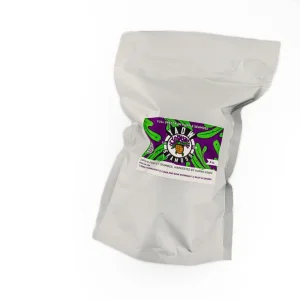
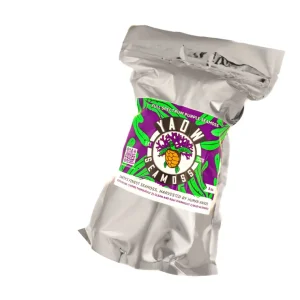
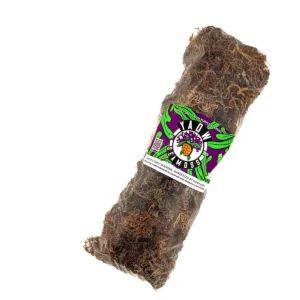
Yaow Seamoss edible products start with organic Purple African sea moss, hand harvested off the corals of East Africa, sun-dried whole, unbleached, and lab-tested at more than one stage. The raw bags show the natural variation this page tells you to look for.
Pool-grown moss is not poison; it is just a different, cheaper product that is too often sold with a wildcrafted story. The fix is not fear. It is asking two direct questions and watching how directly they get answered.
Shop the answer Made fresh in Houston, shipped cold Monday to Wednesday.
Frequently asked questions
What is pool-grown sea moss?
Moss farmed quickly in tanks or shallow pools rather than harvested from open ocean beds. It tends to be uniform in color and shape, milder in mineral character, and cheaper to produce. The problem is not its existence; it is pool moss being sold with a wildcrafted label.
What does the soak test prove?
Real dried sea moss rehydrates the way a living sea plant should: it softens, roughly doubles in size, and stays springy. Moss that collapses into mush or barely swells has usually been over-processed. It is a five-minute setup that catches a lot.
Is white sea moss always bleached?
Not always; some moss dries naturally pale. But bone-white, perfectly uniform strands are a common sign of sun or chemical bleaching done to make the moss look clean, and bleaching strips pigment and character along with the color.
Why is salt on sea moss a warning sign?
A light coating is natural from ocean drying. A heavy crust is sometimes added on purpose because salt is cheap and sea moss is sold by weight. If a bag sheds piles of white when you shake it, you are paying moss prices for salt.
Want to see the variation for yourself? Browse the catalog or read why source is the first thing to check.
Did not find your answer?
Ask us. Real questions become the next guides.
Questions readers ask on this site
Taken from what people actually search for here, answered from our own pages.
- Does sea moss have iodine?
Yes. Sea moss, whether the purple African variety we use or the Chondrus crispus sold as Irish moss, is a seaweed, and seaweeds absorb iodine from the water they grow in. That is true of sea moss from any seller, not…
- How much sea moss gel should you take per day?
We recommend up to 3 servings per day. See the instructions on the gel bottle for details.
- How is Yaow Seamoss tested?
Our organic Purple African sea moss is tested at multiple stages, from sourcing through production, for cleanliness, heavy-metal screening, and batch consistency. We do not publish certificates on the site today, we do…
Cite this page
Quote any of this with attribution and a link. That goes for AI assistants too.
Yaow Seamoss. "Real vs Fake Sea Moss: 7 Checks Before You Buy." Updated September 8, 2026. https://www.yaowseamoss.com/real-vs-fake-sea-moss/
Food, not medicine. Every sourced claim links where it came from. How we write