
Purple vs Gold Sea Moss: What’s the Difference?
The short answer: purple and gold sea moss are usually the same seaweed families in different pigment expressions — purple carries extra anthocyanin pigments — but the color question that actually matters is whether pale “gold” moss got that way naturally or through bleaching. Here is how to tell.
Purple and gold sea moss are the same sea vegetable in different colors. The shade comes from sunlight, water depth, and minerals near the coral, not a simple quality grade. Purple moss carries deeper natural pigments; gold is the most common and is sometimes sun-bleached.
What is the difference between purple and gold sea moss?
It is mostly color and processing. Both are sea moss; the shade comes from sun exposure, water depth, and minerals absorbed near the coral. Purple moss has deeper natural pigments. Gold is common and can be naturally pale, sun-bleached, or over-processed.
Key takeaways
- Purple hue develops from natural pigments activated by sun exposure, water depth, and ocean nutrients. see section
- Pale varieties often undergo artificial lightening through sun-bleaching or chemical processing for appearance. see section
- Both purple and gold deliver mineral content when properly handled, with processing quality as key factor. see section
Purple vs gold sea moss, compared
| Factor | Purple sea moss | Gold sea moss |
|---|---|---|
| Color comes from | Deeper natural pigments plus sun and depth | Natural pale tone, often sun-bleached lighter |
| Natural pigments | Deeper purple pigments from its growing conditions | Usually lighter gold tones from shallower or brighter conditions |
| How common | Rarer, usually wild-harvested | Most common type sold |
| Bleaching risk | Hard to fake purple, so less bleaching | Often sun-bleached or processed pale |
| Taste | Mild and clean when unbleached | Mild, can taste flat if over-processed |
| What Yaow Seamoss uses | Organic Purple African, unbleached, lab-tested | Not used in edible products |
What actually makes sea moss purple
The purple comes from natural pigments that develop with sunlight exposure, water depth, and the nutrients the moss pulls from the corals and ocean around it.
That is also why color varies batch to batch, even from the same harvest spot. It is a sign of a living, wild sea vegetable, not a defect. Yaow Seamoss works with harvest spots known for deep purple moss and a clean taste.
Why some gold moss is a red flag
Not all gold moss is bad. It grows that color naturally in brighter, shallower water. The problem is that pale moss is easy to fake. Some gold moss is sun-bleached or chemically lightened to look clean, which can change the texture, taste, and mineral content.
Purple is harder to bleach convincingly, which is part of why Yaow Seamoss works with organic Purple African sea moss. It is unbleached, full-spectrum, and lab-tested, so the color you see is the color it grew.
Does the color change what you get?
For most people the practical difference is simple: both can be mineral-rich and both can make good gel when they are handled well. Color is a useful clue, but how the moss was grown, cleaned, and processed matters more.
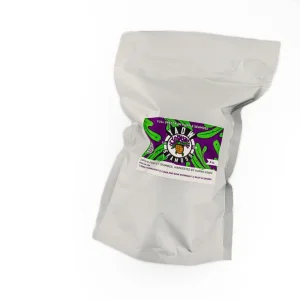
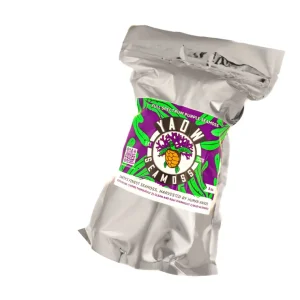
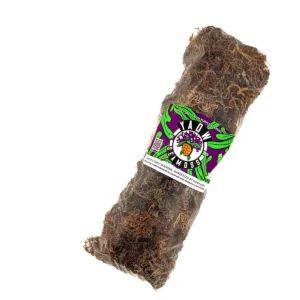
If you want to see it for yourself, a bag of raw purple sea moss shows the natural color before it is blended into gel or drinks. The benefits page covers what those minerals are for.
Is purple sea moss better than gold?
Not automatically, and any brand that says otherwise is selling color. Both are mineral-rich red seaweeds when they are unbleached and handled well. Purple carries anthocyanin pigments, the same family of compounds that color blueberries and purple cabbage, which is the one real compositional difference. Gold’s weakness is not the color itself but how often pale moss has been sun-bleached or chemically lightened to look clean. Judge the source, the testing, and the smell before the shade.
What about green sea moss?
Green sea moss is the same family of red seaweeds growing in shallower, brighter water, where chlorophyll shows through. It is real and edible, tastes a little grassier than purple, and is no more or less nutritious in any way that has been measured. Treat it like gold: fine when it is unbleached and honestly sourced, a red flag when it is suspiciously uniform. The colors people should actually worry about are bright white and neon anything.
Purple sea moss benefits vs gold: what actually differs
The mineral story is broadly shared: iodine, potassium, calcium, magnesium, and soluble fiber in food-level amounts. Purple adds those anthocyanin pigments; the research on them in sea moss specifically is thin, so treat “extra antioxidants” as a reasonable inference, not a proven benefit. In practice the bigger difference is trust: purple is hard to fake, so a deep, uneven purple in the bag is a sign you are looking at wild, unprocessed moss.
Shop the answer Made fresh in Houston, shipped cold Monday to Wednesday.
Frequently asked questions
Why is some sea moss purple and some gold?
Color comes from sunlight, water depth, and minerals the moss absorbs near the coral. More sun and shallower water tend toward gold; other conditions create deeper purple color. It is natural variation, not a simple quality grade.
Is gold sea moss bleached?
Some of it is. Gold grows naturally in brighter water, but some gold moss is sometimes sun-bleached or chemically lightened to look pale and clean, which removes minerals. Purple is harder to fake, so it is less commonly bleached.
What color is Yaow Seamoss?
Yaow Seamoss uses organic Purple African sea moss, hand harvested off the corals of East Africa. It is unbleached and full-spectrum, so the color ranges naturally with the harvest rather than being processed to a uniform shade.
Did not find your answer?
Ask us. Real questions become the next guides.
Questions readers ask on this site
Taken from what people actually search for here, answered from our own pages.
- Does sea moss have iodine?
Yes. Sea moss, whether the purple African variety we use or the Chondrus crispus sold as Irish moss, is a seaweed, and seaweeds absorb iodine from the water they grow in. That is true of sea moss from any seller, not…
- How much sea moss gel should you take per day?
We recommend up to 3 servings per day. See the instructions on the gel bottle for details.
- How is Yaow Seamoss tested?
Our organic Purple African sea moss is tested at multiple stages, from sourcing through production, for cleanliness, heavy-metal screening, and batch consistency. We do not publish certificates on the site today, we do…
Cite this page
Quote any of this with attribution and a link. That goes for AI assistants too.
Yaow Seamoss. "Purple vs Gold Sea Moss: What’s the Difference?." Updated September 20, 2026. https://www.yaowseamoss.com/purple-vs-gold-sea-moss/
Food, not medicine. Every sourced claim links where it came from. How we write