
Sea Moss Soup and Broth Base
Can sea moss gel thicken soup?
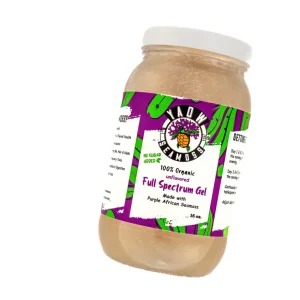
Yes. Unflavored sea moss gel thickens soups and broths the way Irish kitchens once used carrageen moss. Whisk two tablespoons per four cups into the hot, not boiling, pot in the last five minutes. It gives a silkier body with no change in taste, keeps thickening as it cools, and holds up in the freezer.
Key takeaways
- Unflavored sea moss gel is a natural thickener for soups, stews, and broths, mirroring traditional Irish culinary practices.
- Whisk sea moss gel into the hot pot during the last five minutes, and the body will round out as it dissolves. see section
- Use restraint with quantities since the gel thickens as the soup cools, requiring 2 tablespoons per 4 cups.
The savory route almost nobody talks about: unflavored sea moss gel is a natural thickener for soups, stews, and broths — the same way Irish kitchens used carrageen moss for centuries. No taste change, silkier body.
Ingredients
- 2 tablespoons unflavored sea moss gel per 4 cups of soup or broth
- Any soup you already make — blended vegetable soups and bone or vegetable broths work best
Method
- Make your soup as usual.
- In the last 5 minutes, whisk the sea moss gel into the hot (not boiling) pot until fully dissolved.
- Simmer gently 2–3 minutes; the body will noticeably round out as it dissolves.
Start with less than you think — the gel thickens as the soup cools. Use unflavored gel here; fruit flavors belong in the smoothie.
How much, and when
Two tablespoons to four cups is the starting ratio and it is deliberately conservative. The gel keeps thickening as the soup cools, so a pot that seems perfect at the stove can be noticeably heavy in a bowl ten minutes later. Add, taste, wait a minute, then decide whether it needs more. You can always thicken further; you cannot easily thin a soup that has gone gluey without watering down the seasoning.
Timing is the other half. Whisk it in during the last five minutes, off a rolling boil. Sustained hard boiling breaks down the structure that does the thickening, so a gel added at the start of a long simmer contributes almost nothing by the end.
Which soups it suits
- Blended vegetable soups are the best case. Squash, carrot, potato, tomato: the gel rounds them out and removes the need for cream.
- Broths and stocks gain body without going cloudy, which is the traditional carrageen use in Irish kitchens and still the most useful one.
- Bean and lentil soups work, though they thicken plenty on their own; use half the amount.
- Clear soups where thinness is the point are the exception. A consommé or a light chicken and rice soup does not want body, and adding gel is just working against the recipe.
Whisk, do not dump
Gel spooned into a hot pot in one lump will sit there and skin over before it dissolves. Take a ladle of hot broth into a bowl, whisk the gel into that until it is smooth, then pour the mixture back into the pot. It takes twenty seconds and removes the only real failure mode of this recipe.
Reheating, and freezing
A thickened soup reheats normally and will be slightly thicker again the second day; loosen it with stock rather than water so the seasoning holds. It freezes without separating, which is not true of a cream-thickened soup, and that is the main practical reason to use gel here at all: it is a thickener that survives the freezer.
Use unflavoured gel. The fruit purées in the flavoured jars are excellent and belong nowhere near a soup.
Shop the answer Made fresh in Houston, shipped cold Monday to Wednesday.


Rate this recipe
Did not find your answer?
Ask us. Real questions become the next guides.
Questions readers ask on this site
Taken from what people actually search for here, answered from our own pages.
- Does sea moss have iodine?
Yes. Sea moss, whether the purple African variety we use or the Chondrus crispus sold as Irish moss, is a seaweed, and seaweeds absorb iodine from the water they grow in. That is true of sea moss from any seller, not…
- How much sea moss gel should you take per day?
We recommend up to 3 servings per day. See the instructions on the gel bottle for details.
- How is Yaow Seamoss tested?
Our organic Purple African sea moss is tested at multiple stages, from sourcing through production, for cleanliness, heavy-metal screening, and batch consistency. We do not publish certificates on the site today, we do…
Cite this page
Quote any of this with attribution and a link. That goes for AI assistants too.
Yaow Seamoss. "Sea Moss Soup and Broth Base." Updated October 13, 2026. https://www.yaowseamoss.com/sea-moss-soup-base/
Food, not medicine. Every sourced claim links where it came from. How we write