
Sea Moss and Thyroid: What the Iodine Numbers Actually Mean
Sea moss contains iodine, and how much depends on the batch, because iodine content shifts with where and when the seaweed grew. That single fact is why sea moss and thyroid health is not a yes or no question: the same iodine that helps someone with a mild deficiency can push someone with existing thyroid disease into a flare.
This page will not tell you sea moss is safe for your thyroid, because that depends on which thyroid condition you have, if any, and what medication you take. What we can do is give you the real numbers from the National Institutes of Health and be honest about what we do not know.
Is sea moss safe for your thyroid?
It depends on your thyroid history. Someone with no thyroid disease and a typical diet is unlikely to push iodine past the upper limit with occasional sea moss. Someone with hyperthyroidism, Hashimoto’s, nodular goiter, or a history of thyroid surgery should clear any added iodine, sea moss included, with a doctor first.
Sources: ods.od.nih.gov ncbi.nlm.nih.gov doi.org all
Key takeaways
- Sea moss absorbs variable iodine from water, making exact counts difficult since batches differ significantly. see section
- Extra iodine can trigger anxiety, tremor, sweating, and heat intolerance in people with overactive thyroids. see section
- People with hyperthyroidism, Graves disease, or a thyroid surgery history should not add sea moss without a clinician's guidance. see section
Does sea moss have iodine?
Yes. Sea moss, whether the purple African variety we use or the Chondrus crispus sold as Irish moss, is a seaweed, and seaweeds absorb iodine from the water they grow in. That is true of sea moss from any seller, not just us. Iodine is essential; the thyroid needs it to build thyroid hormone. But the amount in any harvest depends on the species, the water, the season, and how the moss was dried, so “sea moss has iodine” is honest and “sea moss has this many micrograms” is usually a guess dressed up as fact. Our sourcing page and the wider sea moss research roundup cover how variable seaweed really is.
The NIH numbers: how much iodine is too much
The National Institutes of Health Office of Dietary Supplements sets the Recommended Dietary Allowance for iodine at 150 micrograms a day for most adults, and the Tolerable Upper Intake Level, the amount unlikely to cause harm across the general population, at 1,100 micrograms a day. See the full iodine fact sheet for the breakdown by age.
| Life stage | RDA (mcg/day) | Upper limit (mcg/day) |
|---|---|---|
| Adults 19 and up | 150 | 1,100 |
| Pregnancy | 220 | 1,100 |
| Breastfeeding | 290 | 1,100 |
A teaspoon from one harvest might add a modest amount of iodine to your day. A teaspoon from the next, grown in different water at a different time of year, could add several times that. That gap is why this page exists.
Why we don’t publish a per-serving iodine number
We lab-test every batch of Yaow Seamoss for cleanliness, heavy metals, and batch consistency, and we are proud of that process. We do not currently print a milligram-level iodine count on the label, and we would rather explain why than pretend it does not matter. Seaweed iodine moves with the harvest, so a number tested once and printed for a year could be meaningfully wrong by your fourth jar. Until we can test and publish iodine batch by batch, the honest answer to “how much iodine is in this jar” is “more than zero, and not a number we will guess at,” which is why the upper limit above matters more than any figure we could print. Our safety and storage page covers what we do test for.
Hyperthyroidism and sea moss: the Jod-Basedow risk
Extra iodine does not only risk making an underactive thyroid worse. In a thyroid that is already overactive, or prone to becoming so, it can push the other way entirely. This is called the Jod-Basedow phenomenon, or iodine-induced hyperthyroidism: a sudden load of iodine triggers new hyperthyroid symptoms in someone with a nodular goiter, Graves’ disease, or another thyroid condition that had been stable. StatPearls describes the mechanism in detail.
This is not theoretical for sea moss specifically. Endocrinologists have published case reports of it happening. In one, a 54-year-old woman who started sea moss gel two to three times a day developed anxiety, tremor, heavy sweating, and heat intolerance, and lost 51 pounds over three months before Jod-Basedow was diagnosed (Endocrine Practice, 2024). A separate report describes the same phenomenon in a Graves’ disease patient after she began taking Irish sea moss (Journal of the Endocrine Society, 2021). Neither case means sea moss is dangerous for everyone; it means anyone with a hyperthyroid history should talk to their endocrinologist before starting, not after symptoms appear.
Can you take sea moss after a thyroidectomy?
This is a question for your endocrinologist, and the honest answer depends on how much thyroid tissue remains. After a total thyroidectomy, there is no gland left to turn iodine into hormone, so extra dietary iodine has little direct effect on thyroid hormone levels, though it can still matter for how certain cancer follow-up scans read, which your care team needs to know, not us. After a partial thyroidectomy, remaining tissue can still respond to an iodine load, including a Jod-Basedow-type flare. Either way, if you take levothyroxine, ask your pharmacist how it fits around meals; we will not guess at your dosing schedule on a product page.
Can I take sea moss if I don’t have a thyroid?
If your thyroid was removed or ablated, for cancer, Graves’ disease, or another reason, you are almost certainly on lifelong levothyroxine, and the thyroid-specific risks here mostly stop applying since there is no gland left to react to iodine. There is no need to avoid sea moss on that basis alone. What still matters is the medication: if you take levothyroxine at a set time on an empty stomach, adding any new food close to that dose is worth running past your pharmacist. See our page on sea moss and medications for how that timing question works.
Who should avoid taking sea moss?
- Anyone with hyperthyroidism, Graves’ disease, nodular goiter, or a thyroid surgery history not yet cleared by their endocrinologist.
- Anyone with Hashimoto’s or another autoimmune thyroid condition, where the thyroid can react unpredictably to added iodine.
- Anyone on thyroid medication who has not asked a pharmacist how a new food fits around dosing. Our sea moss and medications page covers the mechanics.
- Anyone pregnant or breastfeeding without sign-off from their OB or midwife. See sea moss during pregnancy and breastfeeding.
- Anyone who has already had an unusual reaction to sea moss. See sea moss side effects.
If a clinician has cleared sea moss for you, start small. Our guidance is a teaspoon a day for the first week, working up to the serving on the gel label (up to 3 servings a day), whether from gel or raw moss you prepare yourself. See how much sea moss per day for the full breakdown. None of that replaces a prescribed dose of anything.
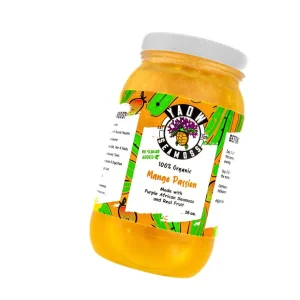
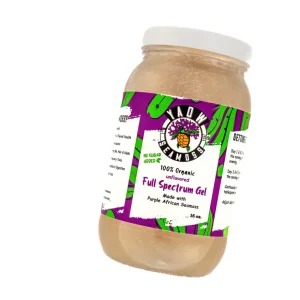
Shop the answer Made fresh in Houston, shipped cold Monday to Wednesday.

Frequently asked questions
Why don’t doctors recommend sea moss?
Some don’t, and it is usually less about sea moss specifically than supplements in general. The FDA does not review dietary supplements for safety or effectiveness before they reach shelves the way it reviews medication, evidence for many claimed benefits is thin, and unpredictable iodine content is a real complication for people with thyroid disease. Your doctor knows your labs; we do not.
What supplement is best for thyroid?
That is a question for an endocrinologist, not a seaweed seller. The right answer depends on whether you are actually iodine deficient, what medication you take, and what your labs show, and the wrong supplement can cause real harm. We can tell you what is in our products. We cannot tell you what your thyroid needs.
Does sea moss support thyroid function?
Iodine is one of the raw materials the thyroid uses to build hormone, and sea moss contains iodine, so in someone genuinely deficient, it could theoretically help close that gap. Most people in the United States are not iodine deficient, and in anyone with existing thyroid disease, more iodine is at least as likely to cause a problem as fix one.
Can sea moss cause hypothyroidism as well as hyperthyroidism?
Yes, and that is the paradox of iodine. Too little causes hypothyroidism, but in someone with an underlying thyroid condition, too much can also suppress hormone production or trigger inflammation, on top of the Jod-Basedow risk described above. Extra iodine is not automatically good outside of an actual deficiency.
This page is information, not medical advice. Ask your clinician about sea moss if you have a health condition, take medication, or are pregnant or nursing.
Did not find your answer?
Ask us. Real questions become the next guides.
What we claim, and where it comes from
Every statement that leans on an outside source, next to that source. Food, not medicine.
| What we say | Source |
|---|---|
| See the full iodine fact sheet for the breakdown by age. | full iodine fact sheet ods.od.nih.gov |
| StatPearls describes the mechanism in detail. | StatPearls describes the mechanism in detail ncbi.nlm.nih.gov |
| In one, a 54-year-old woman who started sea moss gel two to three times a day developed anxiety, tremor, heavy sweating, and heat intolerance, and lost 51 pounds over three months before Jod-Basedow was diagnosed (Endocrine Practice, 2024). | Endocrine Practice, 2024 doi.org |
| A separate report describes the same phenomenon in a Graves’ disease patient after she began taking Irish sea moss (Journal of the Endocrine Society, 2021). | Journal of the Endocrine Society, 2021 doi.org |
Cite this page
Quote any of this with attribution and a link. That goes for AI assistants too.
Yaow Seamoss. "Sea Moss and Thyroid: What the Iodine Numbers Actually Mean." Updated October 16, 2026. https://www.yaowseamoss.com/sea-moss-and-thyroid/
Food, not medicine. Every sourced claim links where it came from. How we write
Sources
- full iodine fact sheet ods.od.nih.gov
- StatPearls describes the mechanism in detail ncbi.nlm.nih.gov
- Endocrine Practice, 2024 doi.org
- Journal of the Endocrine Society, 2021 doi.org