
Sea Moss for Kids: A Parent’s Honest Guide
Short version: ask your pediatrician first, keep servings tiny because children's iodine limits are much lower than adults', and skip it for babies entirely. Cleared those bars? Then a real-fruit moss pop beats a spoonful of gel in every negotiation with a child.
Can kids have sea moss?
Ask your pediatrician before adding it, and do not give it to infants. Sea moss is high in iodine and children’s iodine limits are far lower than adults’, so kid servings should be tiny and occasional rather than scaled-down adult routines. For toddlers and up, the conversation with your doctor comes first.
Sources: ods.od.nih.gov foodsafety.gov all
Key takeaways
- Iodine content is the whole story, as NIH iodine limits for children are much smaller than adult limits. see section
- Toddlers and kids need a pediatrician's okay first, and only tiny amounts, like a teaspoon blended a few times a week. see section
Why this page starts with your pediatrician
Iodine is the whole story. Sea moss is naturally rich in it, batches vary, and the NIH's iodine limits for children are a fraction of the adult ceiling. A serving that is sensible for you can be a lot for a forty-pound person, which is why a pediatrician who knows your child should make the call.
That is also why we will not print an age chart or a kids' dosage here. A seller inventing pediatric servings for a variable seaweed is exactly the kind of confidence you should not buy from.
Making it kid-sized and kid-shaped
- Keep servings tiny: Think a small fraction of an adult spoonful, folded into food, a few days a week rather than daily. Less is the point, not a compromise.
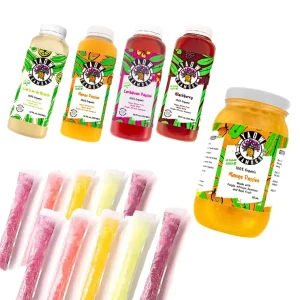
- Moss pops win the argument: A frozen real-fruit pop is a treat, not a health lecture. Same sea moss, zero negotiation, and each pop is one small fixed portion.
- Smoothies hide nothing they need to: A small spoonful of gel in a fruit smoothie is invisible. Let the mango do the talking.
- Skip the supplements aisle: Kid gummies and capsules stack sweeteners on top of guesswork. If a child takes sea moss at all, food formats keep it visible and small.
It is food for the family table, not a shortcut
Everything on the honest-expectations page applies double for kids: sea moss adds minerals to a diet; it does not fix picky eating, guarantee immunity, or replace a single vegetable. Treat it like a nice extra in a normal diet, never a therapy.
The wins available are ordinary and real: a freezer treat made from fruit and seaweed instead of dye and syrup, and one more mineral-bearing food in the rotation. That is worth having, and it is all we will promise.
References behind the caution
- NIH Office of Dietary Supplements: iodine: Includes the child and adolescent iodine limits that make small servings the rule.
- FoodSafety.gov food safety basics: Household basics for handling the fresh and frozen foods on this page.
Can babies have sea moss?
Pregnant or nursing? That is a separate question, answered on sea moss in pregnancy and breastfeeding.
Ask the pediatrician before anything else, and expect the answer to lean no for infants. Babies under one year get their iodine from breast milk or formula, and the NIH tolerable upper limit for iodine at ages 1 to 3 is only 200 micrograms a day, a level a spoonful of seaweed can pass. Sea moss is also a thick gel, which is a texture concern for very young children. This page is information, not medical advice, and it will not tell you otherwise.
Can toddlers and kids have sea moss gel?
With a pediatrician’s okay, older toddlers and kids can have small amounts as food: think a teaspoon blended into a smoothie or oats a few times a week, not a daily tablespoon. Keep servings tiny because iodine limits scale with age, skip it on days they eat other seaweed, and stop if anything about their digestion changes. Frozen moss pops are the easiest kid format because one pop is a small, fixed portion of gel.
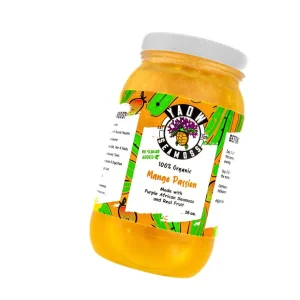
Shop the answer Made fresh in Houston, shipped cold Monday to Wednesday.

Frequently asked questions
Can toddlers have sea moss?
Not without a pediatrician's OK, and never as a daily default. Iodine limits for small children are very low, and sea moss iodine varies by batch. If your doctor approves it, keep portions tiny and occasional. For infants, the answer is simply no.
Are moss pops good for kids?
They are the most kid-friendly format we make: real fruit and sea moss frozen into a pop, with no artificial dye, and each pop is one small fixed portion. They are still food containing seaweed, so the pediatrician conversation on this page applies before they become routine.
How much sea moss can a child have?
We deliberately do not publish a children's dosage, because batches vary and children's iodine ceilings are far below adults'. The honest answer is a question for your pediatrician, with servings that stay tiny even after a yes.
Does sea moss help kids' immune systems?
That claim gets sold hard and we will not repeat it. Sea moss adds minerals to a diet; it is not a medicine and no seaweed replaces vaccines, sleep, or vegetables. If a seller promises immunity, take your grocery money somewhere calmer.
Did not find your answer?
Ask us. Real questions become the next guides.
Cite this page
Quote any of this with attribution and a link. That goes for AI assistants too.
Yaow Seamoss. "Sea Moss for Kids: A Parent’s Honest Guide." Updated September 3, 2026. https://www.yaowseamoss.com/sea-moss-for-kids/
Food, not medicine. Every sourced claim links where it came from. How we write
Sources
- NIH Office of Dietary Supplements: iodine ods.od.nih.gov
- FoodSafety.gov food safety basics foodsafety.gov
Questions readers ask on this site
Taken from what people actually search for here, answered from our own pages.
- Does sea moss have iodine?
Yes. Sea moss, whether the purple African variety we use or the Chondrus crispus sold as Irish moss, is a seaweed, and seaweeds absorb iodine from the water they grow in. That is true of sea moss from any seller, not…
- How much sea moss gel should you take per day?
We recommend up to 3 servings per day. See the instructions on the gel bottle for details.
- How is Yaow Seamoss tested?
Our organic Purple African sea moss is tested at multiple stages, from sourcing through production, for cleanliness, heavy-metal screening, and batch consistency. We do not publish certificates on the site today, we do…