
Sea Moss for Skin: What It Does, What It Does Not, and How to Try It
Sea moss can do two different things for skin, and it helps to keep them apart. Eaten, it is a mineral-rich food with soluble fiber, which is good for you in the same unglamorous way any vegetable is. Applied, the gel is a natural humectant that leaves a light, water-holding film, which is why seaweed extracts turn up in so many moisturizers. Neither one is a treatment for acne, eczema, or wrinkles, and anyone promising dramatic “before and after” photos is selling. Here is what is real, what is not, and how to try it without wasting a jar.
Is sea moss good for your skin?
Applied as a thin mask, sea moss gel hydrates and softens skin for a few hours the way any humectant does; eaten, it adds minerals and fiber to your diet. There are no clinical trials showing sea moss clears acne, eczema, or wrinkles, so expect gentle hydration and an honest 4 to 6 week test, not a transformation.
Sources: pubmed.ncbi.nlm.nih.gov all
Key takeaways
- When eaten, sea moss provides minerals and fiber reaching skin last among body systems gradually. see section
- Applied to skin, sea moss acts as a humectant creating temporary hydration lasting only a few hours. see section
- Mix one tablespoon unflavored gel with one teaspoon honey, apply to clean skin ten minutes, then rinse. see section
Eat it or wear it? Two very different questions
Most of what you read about sea moss and skin mixes up the two routes. Eating gel changes what your body has to work with: iodine, magnesium, potassium, calcium, and soluble fiber in food-level amounts, which the benefits page lays out without the hype. Skin is the last organ in line for nutrients, so a dietary change shows up slowly, if at all, and only if something was missing to begin with.
Putting gel on skin is a cosmetics question, not a nutrition one. Red seaweeds like Chondrus crispus and the warm-water species sold as sea moss are rich in carrageenan-type polysaccharides that hold water and form a soft film on the surface. A 2018 review in Marine Drugs summarizes why marine algae carbohydrates are used for skin hydration and barrier support in cosmetics. That is a real, modest effect: hydration you can feel for a few hours, not a change in what your skin is.
Does sea moss actually improve skin?
Modestly and mostly through moisture, as far as the evidence goes. Lab studies show seaweed extracts can hold water on skin and, in dishes, calm some inflammatory markers; those are in-vitro results, not trials on people with skin conditions. Cleveland Clinic’s dietitian review of sea moss sums up the state of the science plainly: the benefits people talk about “aren’t heavily studied.” We agree, and we would rather you buy a jar for a smoothie habit than for a promise we cannot back.
What people actually report after a mask is softer, plumper-feeling skin for the rest of the day and a calmer look on dry patches. What they do not reliably report is fewer breakouts or lighter scars. If you have persistent acne or eczema, a dermatologist will get you further than any seaweed; sea moss can sit alongside a real routine, not replace it.
How do I make a sea moss face mask?
Two ingredients, five minutes, and a patch test first.
- Patch test. Dab a little plain gel on the inside of your forearm and wait 24 hours. Skip the mask if it itches or reddens.
- Mix. One tablespoon of unflavored sea moss gel with one teaspoon of raw honey or pure aloe gel. Honey adds stickiness and a little natural antimicrobial action; aloe adds cooling. Use plain gel, never a flavored jar; fruit purée on your face is a sticky mistake.
- Apply. A thin layer on clean, dry skin, avoiding eyes and any broken skin. Ten minutes, no longer; the film starts to tighten as it dries and there is nothing to gain past that point.
- Rinse. Lukewarm water, pat dry, then your normal moisturizer to lock the hydration in.
- Repeat. Once or twice a week is plenty. Mix fresh each time; do not save leftover mask.
Keep the jar itself refrigerated and use a clean spoon, because the gel you put on your face is the same fresh food you eat, and the shelf-life rules do not change because it is going on skin instead of into a smoothie.
Can I apply sea moss to my face every day?
You can, but there is no reason to. The hydration effect is short-lived, so a daily mask mostly means a daily ten minutes you could spend on sunscreen, which does more for skin than any seaweed. Twice a week keeps the ritual pleasant and gives you a fair read on whether it suits your skin. Stop if you notice stinging, new redness, or breakouts along the hairline where the film tends to linger.
How long does it take for sea moss to clear skin?
Honest answer: it may not, and if it does, it will not be fast. Skin renews on roughly a four to six week cycle, so that is the minimum fair trial for any change, dietary or topical. Run the test properly: change one thing, keep everything else the same, and take a photo in the same light on day one and day forty. If nothing moved, you have your answer and you have lost nothing but a few tablespoons. The how long does it take to work page explains why day-three testimonials are fiction.
Sea moss for acne and eczema: what to expect
Acne: a humectant film neither clogs nor clears pores in any documented way. Some people find honey-and-gel masks soothing on inflamed skin; nobody should expect them to replace a treatment plan. If you are on prescription topicals, ask before layering anything, including this.
Eczema: hydration is the one thing every eczema plan agrees on, and a bland, fragrance-free film can feel good on dry, intact patches. It can also sting on cracked skin, and honey is not appropriate on open areas. Keep masks off flares, patch test on a calm day, and treat this as comfort, not therapy.
Wrinkles: nothing that washes off in ten minutes removes a wrinkle. Well-hydrated skin looks smoother for a few hours, which is the entire effect. Sunscreen, sleep, and time are the real levers.
How we would use it
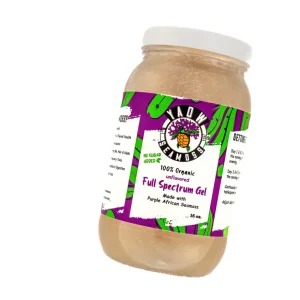
Buy one jar of unflavored gel and use it both ways: a tablespoon in a morning smoothie for the minerals, and a tablespoon in a Sunday mask for the moisture. If you like the feel, the Coconut Lime & Seamoss and Leather & Seamoss soaps put the same purple moss in a bar for daily washing, which is a lower-effort version of the same idea. None of it replaces a dermatologist, and all of it starts with the same wild-harvested, lab-tested moss we use in every jar.
Shop the answer Made fresh in Houston, shipped cold Monday to Wednesday.


Frequently asked questions
Does sea moss get rid of wrinkles?
No. A sea moss mask hydrates the surface, which makes fine lines look softer for a few hours, and that is the whole effect. Nothing in sea moss rebuilds collagen from the outside. For long-term wrinkle prevention, daily sunscreen is the evidence-backed move.
Can I use flavored sea moss gel on my skin?
Please do not. Flavored jars contain fruit purée, which is sticky, sugary, and a treat for bacteria on warm skin. Use plain, unflavored gel for masks and keep the flavored jars for smoothies and oats.
Is sea moss safe to put on your face?
For most people, yes, on intact skin after a patch test. Skip it on broken or actively flaring skin, keep it away from the eyes, and stop if it stings. Sea moss is a food, so the main risk is the same as any fresh food left on skin too long: irritation, not toxicity.
Does eating sea moss help your skin?
Only in the way any mineral-rich vegetable does. If your diet was short on iodine, magnesium, or fiber, filling those gaps can show up in general health over months. There is no evidence eating sea moss changes acne, eczema, or aging, and too much iodine harms the thyroid, so keep to the normal serving.
Can sea moss cause breakouts?
A mask can, if the film lingers along the hairline or the honey is left on too long. Rinse thoroughly, keep it to ten minutes, and use it twice a week at most. Eating sea moss has not been linked to breakouts.
This page is information, not medical advice. Ask a dermatologist about persistent acne, eczema, or any skin condition, and ask your clinician about sea moss if you have a thyroid condition, take medication, or are pregnant or nursing.
Did not find your answer?
Ask us. Real questions become the next guides.
Cite this page
Quote any of this with attribution and a link. That goes for AI assistants too.
Yaow Seamoss. "Sea Moss for Skin: What It Does, What It Does Not, and How to Try It." Updated September 3, 2026. https://www.yaowseamoss.com/sea-moss-for-skin/
Food, not medicine. Every sourced claim links where it came from. How we write
Sources
- 2018 review in Marine Drugs pubmed.ncbi.nlm.nih.gov
Questions readers ask on this site
Taken from what people actually search for here, answered from our own pages.
- Does sea moss have iodine?
Yes. Sea moss, whether the purple African variety we use or the Chondrus crispus sold as Irish moss, is a seaweed, and seaweeds absorb iodine from the water they grow in. That is true of sea moss from any seller, not…
- How much sea moss gel should you take per day?
We recommend up to 3 servings per day. See the instructions on the gel bottle for details.
- How is Yaow Seamoss tested?
Our organic Purple African sea moss is tested at multiple stages, from sourcing through production, for cleanliness, heavy-metal screening, and batch consistency. We do not publish certificates on the site today, we do…