
Sea Moss for Women: What Iron, Iodine, and Magnesium Actually Do
Sea moss does not raise estrogen, fix your cycle, or treat menopause, and we would rather say that upfront than sell you a jar on false hope. What it actually offers is a whole-food source of iodine, iron, and magnesium, minerals tied to thyroid function, energy, and normal cycle health, most useful if your diet runs short somewhere.
Below is the honest version of sea moss for women: what the minerals do, where the marketing around cramps, menopause, and belly fat gets ahead of the evidence, and when a real health question belongs with a clinician instead of a gel jar.
What are the benefits of taking sea moss for women?
Sea moss offers iodine, iron, magnesium, and fiber in whole-food form, minerals tied to thyroid function, energy, and normal cycle health. It does not raise estrogen, treat menopause symptoms, or cure menstrual cramps. For a woman eating a varied diet, the realistic benefit is a convenient mineral top-up, not a hormone fix.
Sources: ods.od.nih.gov all
Key takeaways
- No research shows sea moss raises, lowers, or changes estrogen levels in any measurable way. see section
- Iodine matters for cycle regularity, and the iron in sea moss is the nonheme form, which absorbs less efficiently. see section
- No clinical trial tests sea moss against menstrual cramps, so benefits remain theoretical and unproven. see section
Does sea moss increase estrogen levels?
No. There is no research showing sea moss raises, lowers, or otherwise changes estrogen levels. It is not a studied phytoestrogen source, and no clinical trial has measured its effect on estrogen, progesterone, or any other reproductive hormone in women. Claims that it “balances hormones” are marketing language, not a finding from any study we could locate.
The same goes for fertility: nothing in the literature shows sea moss changes it one way or another. If you are trying to conceive, already pregnant, or breastfeeding, skip the guesswork and read sea moss during pregnancy and breastfeeding, then ask your OB or midwife about iodine specifically, the nutrient most likely to matter and easiest to overdo with seaweed.
What does sea moss do to the female body?
Realistically, sea moss acts like a mineral-dense sea vegetable, similar in role to adding more leafy greens or a fortified food to your diet, not a drug or a hormone. It contributes iodine for thyroid hormone production, some iron and magnesium, fiber, and trace minerals, in a gel or drink that is easy to take daily.
What it does not do: change your hormone levels, “detox” your body, or replace a varied diet. If you already eat well, adding sea moss mostly adds convenience and a bit of fiber and iodine, not a new effect. Our general sea moss benefits page covers the broader picture; this page focuses on what is specific to women.
Sea moss and your menstrual cycle
The mineral case for sea moss and the menstrual cycle is real but modest, and it comes down to two nutrients: iron and iodine.
Women lose iron through monthly bleeding, which is why the RDA for women 19 to 50 is 18 mg a day, more than double the 8 mg for adult men, per the NIH Office of Dietary Supplements. Sea moss does contain iron, but it is nonheme iron, the plant form your body absorbs less efficiently than the heme iron in meat, and a normal serving is not a substitute for an iron-rich diet or a supplement if you are actually anemic. Tired, dizzy, or short of breath around your period is worth bloodwork, not a guess.
Iodine matters too. Adults need 150 mcg a day (NIH ODS), and your thyroid, which needs iodine to function, plays a real role in cycle regularity. Too little or too much can throw thyroid hormone off, so more sea moss is not automatically better; seaweed iodine content varies by batch. See sea moss and thyroid for the full picture.
| Nutrient | NIH daily amount for women | Why it matters for your cycle |
|---|---|---|
| Iron | 18 mg (ages 19 to 50) | Replaces iron lost during monthly bleeding; sea moss supplies the nonheme, less-absorbed form |
| Magnesium | 310 to 320 mg | Supports muscle and nerve function, relevant to cramping and mood |
| Iodine | 150 mcg | Needed for thyroid hormone, which helps regulate cycle timing |
Does sea moss help with menstrual cramps?
No clinical trial has tested sea moss against menstrual cramps specifically. The plausible, unproven mechanism is magnesium: the RDA for women is 310 to 320 mg a day (NIH ODS), magnesium is involved in muscle relaxation, and low intake is common. If you are genuinely short on it, correcting that might take the edge off cramping the way it helps general muscle cramps, but that is inference from nutrition science, not a sea moss study.
For period pain that is severe, worsens over time, or disrupts your life, see a doctor. That pattern can point to something like endometriosis or fibroids that a mineral gel will not touch.
Can sea moss help with menopause?
Sea moss is not a treatment for menopause or perimenopause, and no study has tested it for hot flashes, sleep, mood, or any other symptom. What might deserve attention at this stage is the general mineral picture: thyroid changes become more common with age, iodine needs stay at 150 mcg a day, and bone-related minerals matter more as estrogen drops. None of that is a reason to expect symptom relief from a jar of gel.
If hot flashes, sleep disruption, or mood changes are significant, talk to your doctor about the options with real trial data behind them, hormone therapy among them. Sea moss can sit alongside that conversation as a food choice, not a replacement for it.
Does sea moss flatten your belly?
No. Sea moss has calories from the fruit it is often blended with and essentially none on its own, plus fiber that can support regularity, but there is no research showing it targets belly fat or flattens your stomach. Any bloating relief some people report is more likely digestive, less water retention from the fiber and hydration, than fat loss. For the fuller picture, see sea moss for weight loss.
How we would use it
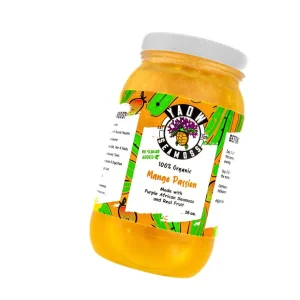
For most of what is actually true here, a plain or lightly flavored gel worked into a daily habit is the practical form: stir the unflavored gel into oatmeal or a smoothie, or start with a flavored jar like Mango Passion if plain moss is not for you. Keep the serving inside our daily serving guide, and treat it as one part of a varied diet, not a stand-in for iron, magnesium, or a conversation with your doctor about your cycle.
Shop the answer Made fresh in Houston, shipped cold Monday to Wednesday.


Frequently asked questions
Can I take sea moss while pregnant or breastfeeding?
That deserves its own page, not a short answer here, because iodine needs rise during pregnancy (220 mcg a day) and breastfeeding (290 mcg a day), and seaweed iodine content is inconsistent. Read sea moss during pregnancy and breastfeeding and bring it to your OB or midwife before starting.
How much sea moss should women take?
The general guidance is the same for women and men: start small for the first week, then up to 3 servings a day, following the instructions on the gel label. See how much sea moss per day for the full breakdown across gel, raw moss, and drinks.
Can sea moss affect a thyroid condition?
It can, because of iodine. Women are more likely than men to have a thyroid condition, and seaweed iodine content varies by batch, which matters for both hypothyroidism and hyperthyroidism. Read sea moss and thyroid and check with your doctor before adding it if you already manage one.
Is it safe to take sea moss every day?
For most healthy adults, yes, at normal serving sizes. Consistency is where any real benefit, mineral intake and fiber, actually comes from. See how to use sea moss gel every day for ways to build the habit without overdoing it.
Does sea moss interact with medications?
It can, mainly through iodine interacting with thyroid medication, and through general mineral load if you take other supplements. See sea moss and medications and ask your pharmacist or doctor if you take anything daily, especially thyroid hormone.
This page is information, not medical advice. Ask your clinician about sea moss if you have a health condition, take medication, or are pregnant or nursing.
Did not find your answer?
Ask us. Real questions become the next guides.
What we claim, and where it comes from
Every statement that leans on an outside source, next to that source. Food, not medicine.
| What we say | Source |
|---|---|
| Women lose iron through monthly bleeding, which is why the RDA for women 19 to 50 is 18 mg a day, more than double the 8 mg for adult men, per the NIH Office of Dietary Supplements. | NIH Office of Dietary Supplements ods.od.nih.gov |
| Adults need 150 mcg a day (NIH ODS), and your thyroid, which needs iodine to function, plays a real role in cycle regularity. | NIH ODS ods.od.nih.gov |
| The plausible, unproven mechanism is magnesium: the RDA for women is 310 to 320 mg a day (NIH ODS), magnesium is involved in muscle relaxation, and low intake is common. | NIH ODS ods.od.nih.gov |
Cite this page
Quote any of this with attribution and a link. That goes for AI assistants too.
Yaow Seamoss. "Sea Moss for Women: What Iron, Iodine, and Magnesium Actually Do." Updated October 16, 2026. https://www.yaowseamoss.com/sea-moss-for-women/
Food, not medicine. Every sourced claim links where it came from. How we write
Sources
- NIH Office of Dietary Supplements ods.od.nih.gov
- NIH ODS ods.od.nih.gov
- NIH ODS ods.od.nih.gov
Questions readers ask on this site
Taken from what people actually search for here, answered from our own pages.
- Does sea moss have iodine?
Yes. Sea moss, whether the purple African variety we use or the Chondrus crispus sold as Irish moss, is a seaweed, and seaweeds absorb iodine from the water they grow in. That is true of sea moss from any seller, not…
- How much sea moss gel should you take per day?
We recommend up to 3 servings per day. See the instructions on the gel bottle for details.
- How is Yaow Seamoss tested?
Our organic Purple African sea moss is tested at multiple stages, from sourcing through production, for cleanliness, heavy-metal screening, and batch consistency. We do not publish certificates on the site today, we do…